


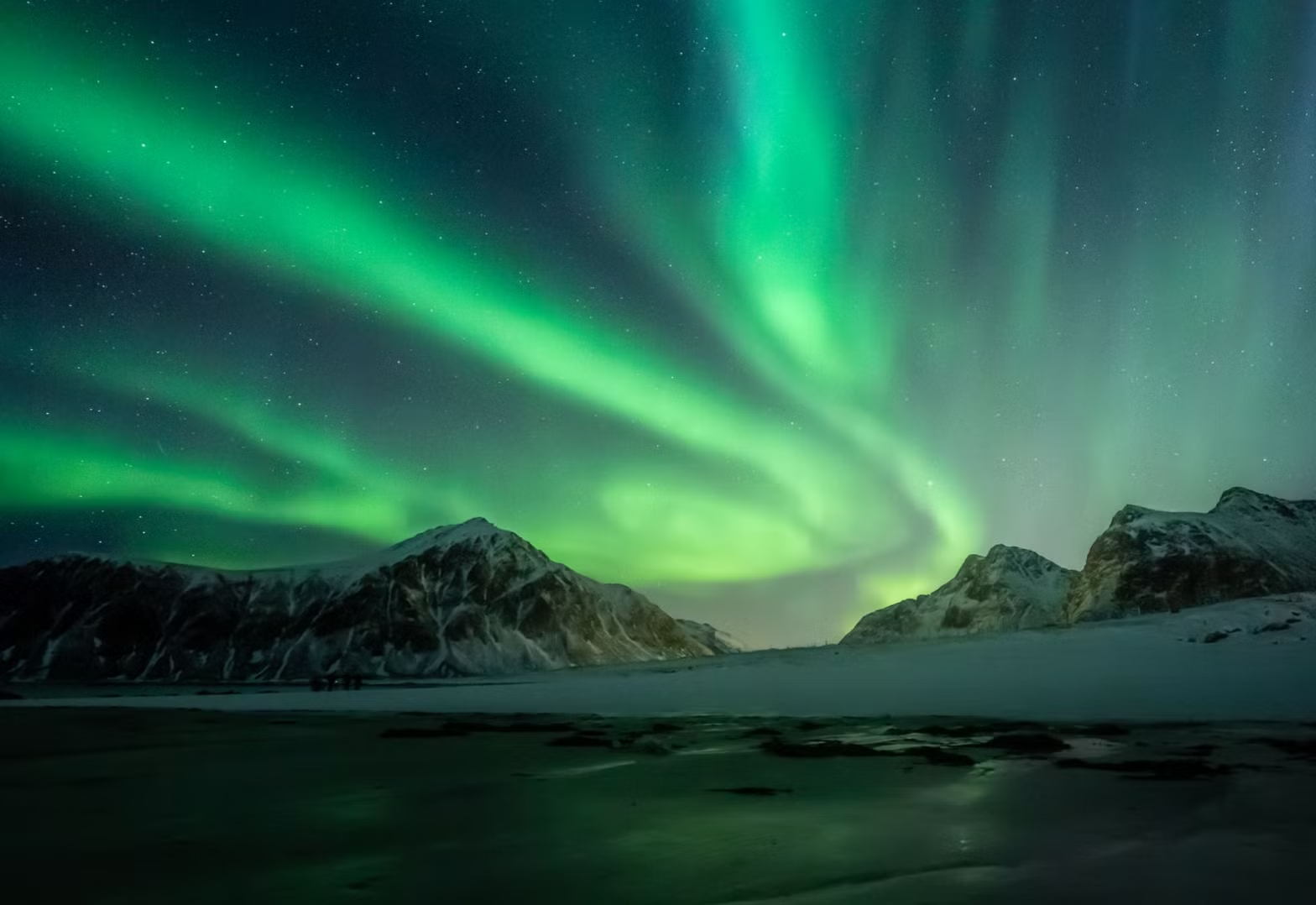
When the Sun produces a strong solar flare or coronal mass ejection, charged particles can travel toward Earth and interact with its magnetic field. If conditions are favorable, this activity can trigger a geomagnetic storm and increase the chances of seeing the Aurora Borealis in certain regions.

Who Will Be Able to See the Aurora This Week?
The Northern Lights may be visible farther south than usual, potentially reaching areas around Pennsylvania and Oregon. Locations farther north could have an even better chance of seeing aurora activity, provided skies remain clear.
Aurora forecasts can change quickly because the strength and timing of geomagnetic storms are difficult to predict precisely. If you live near or above 40 degrees north latitude, it may be worth checking the night sky when conditions are favorable.
Related: The Best Tips for Seeing the Northern Lights
Why Do Auroras Happen?
Auroras form when energetic particles from the Sun travel toward Earth and interact with the planet’s magnetic field. The magnetic field guides many of these particles toward the polar regions, where they collide with gases high in the atmosphere.
These collisions transfer energy to atoms and molecules in the atmosphere. As they release that energy, they produce light in different colors, creating the glowing patterns known as auroras. The process is somewhat similar to how certain types of fluorescent lighting produce visible light.
Is a Coronal Mass Ejection That Causes Aurora Dangerous?
Coronal mass ejections (CMEs) can sometimes affect electronics in space and, in stronger cases, infrastructure on Earth. However, the CME observed on August 30 is not expected to pose a serious threat.
The August 30 CME was moderate in strength, and NOAA predicted that it could produce a G3 geomagnetic storm at its peak, with a small possibility of reaching G4 levels. A storm of this intensity can push the aurora farther away from Earth’s polar regions, making it visible in areas that do not normally see it.
G3 geomagnetic storms may also cause temporary disruptions to certain wireless communication systems, minor fluctuations in electrical power grids, and occasional interference with satellite communications. These effects, however, are generally expected to be limited and short-lived.
Auroras can be surprisingly faint, particularly in areas with significant light pollution. If you plan to look for one, face north and try to get away from bright lights. Avoid looking at your phone for a while so your eyes have time to adjust to the darkness. Traveling to a darker location away from city lights can significantly improve your chances of seeing the aurora.
If you want to photograph it, most modern smartphones should be capable of capturing the display. Standard Night Mode or another low-light photography setting is often sufficient. Astrophotography modes can also work, but their longer exposure times may blur some of the aurora’s distinctive ribbon-like details.
FAQs About “Aurora Alert: Northern Lights May Be Visible Early This Week”
Why might the Northern Lights be visible early this week?
The Northern Lights may become visible farther south than usual when increased solar activity triggers a geomagnetic storm around Earth.
What causes the Northern Lights?
Auroras occur when charged particles from the Sun interact with gases in Earth’s upper atmosphere, producing glowing colors in the night sky.
What is the best time to see the Northern Lights?
The best viewing conditions are usually during the darkest nighttime hours, away from city lights, when skies are clear.
Where should I look to see the aurora?
If you are in an area where the aurora may be visible, look toward the northern horizon from a dark location with an unobstructed view.
Can light pollution make the Northern Lights harder to see?
Yes. Streetlights, buildings, and other artificial lighting can make faint auroras difficult to spot. Traveling to a darker area can improve visibility.
Can I photograph the Northern Lights with a smartphone?
Yes. Many modern smartphones can capture auroras using Night Mode or another low-light setting. Keeping the phone steady can also improve image quality.
Are geomagnetic storms that cause auroras dangerous?
Most geomagnetic storms that produce visible auroras do not pose a direct danger to people. Stronger storms can sometimes temporarily affect satellites, radio communications, navigation systems, and power grids.
Conclusion
The Northern Lights may be visible farther south than usual early this week due to increased geomagnetic activity. Skywatchers should look for clear skies and head to darker locations away from city lights for the best chance of seeing the aurora.
For better viewing, face north and allow your eyes time to adjust to the darkness. A smartphone with Night Mode may also capture colors and details that are difficult to see with the naked eye.
